
Uninvited Guests: Astral Parasites in our Energetic Body
An investigation into how invisible entities and psychic complexes sabotage our psycho-spiritual space

“… and Jesus said: If you bring forth what is within you, what you bring forth will save you. If you do not bring forth what is within you, what you do not bring forth will destroy you.”- Gospel of Thomas, Nag Hammadi Scrolls (1947)
In recent years, I have dedicated an essential part of my life to the experiential and spiritual study of so-called astral parasites. Not from the comfort of theory, but through direct experience: removing my own, one by one, in deeply altered states of consciousness induced by heroic doses of psilocybin, guided by somatic extraction techniques to release dense energies embedded in my own body.
This inner journey has been neither easy nor comfortable. Still, it has offered me a transformative vision of the invisible forces that influence the psyche and the destiny of individuals, far more than we usually admit. What at first seemed like a delusional or symbolic territory gradually revealed itself as a precise cartography of human suffering, a hidden region where certain energies cling, feed, and sometimes rule over parts of our psyche without us noticing.
I believe it is both timely and necessary to share what I have learned, shedding light on a subject that for centuries has been misunderstood or outright demonized. My intention is not to impose a truth, but to offer a bridge: between the symbolic darkness of esoteric traditions and the analytical clarity of modern psychology. Because understanding these entities, whether real or internal, is, ultimately, an act of self-liberation.
Astral Parasites: Historical Evolution
In the realm of esotericism, there exists an ancient and extensively documented belief in the existence of entities known as astral parasites. These are subtle formations or energies that, depending on the case, may attach themselves to the human aura or psyche, feeding on its vitality. Their influence can manifest through symptoms ranging from inexplicable fatigue to intense fears and various emotional disturbances.
Throughout history, these parasites have been interpreted in multiple ways: as malevolent spirits trapped in lower planes, as products of dark rituals, beings from other dimensions, or even as projections generated by our own negative thoughts and emotions.
The earliest references to these entities come from ancient philosophical and religious traditions. In the West, the earliest mentions arise from Hellenistic esoteric currents such as Neoplatonism and Hermeticism, which developed a complex cosmology of subtle planes inhabited by invisible intelligences and influences.
The followers of Hermes Trismegistus spoke of an intermediate astral plane populated by forces that could act either for good or evil. In Hermetic and Gnostic texts, demons or archons are mentioned as beings who obstruct the ascent of the soul and feed on its densest emotions. While the ancient Gnostics did not use the term “astral parasite,” they conceived of the archons as cosmic entities of parasitic nature, which can be considered one of the earliest antecedents of the modern concept.
The origin of the term “astral parasite” itself dates back to the early centuries of the Christian era. In a context more linked to magic, the Neoplatonic philosopher Porphyry (233–305 CE) warned that certain impure souls, after death, remained trapped in the material plane and could attach themselves to the living, causing disturbances or feeding off their vital energy.
The Roman writer Apuleius (125–170 CE) also spoke of spiritual beings condemned to wander the earth, provoking mental illness and malevolent influences. In his texts, he called them larvae, a Latin word that literally means “parasitic spirit.”

This notion took deep root in Roman thought and was later taken up by Paracelsus (1493–1541), a physician and alchemist who revolutionized medieval medicine. Paracelsus held that every ailment of body or soul originated in the astral plane. In his writings on invisible diseases, he classified these influences into various categories, including incubi and succubae. He asserted that human vices could generate the “seeds” of such entities, which, once developed, fed on the individual’s vitality. For him, the defects of the soul not only attracted these parasites but could also be their very cause.
The alchemical tradition continued this symbolic vision inherited from Paracelsus, developing the idea that certain elemental entities had to be transmuted or eliminated as part of the process of the inner Great Work.
These ideas eventually solidified one of the most enduring notions of Western occultism: the existence of an invisible ecosystem beyond the material veil, inhabited by parasitic or demonic forces that feed on the negative energies of human beings.
Later esoteric currents, such as Rosicrucianism, also adopted these ideas. The Rosicrucian manifestos and other Hermetic texts of the time, though shrouded in allegorical language, reiterated the idea that ignorance and raw matter generate subtle forms harmful to the soul.
The Swedish mystic and visionary Emanuel Swedenborg (1688–1772), in his work Heaven and Hell, described how, in his visions, he perceived lower spirits clinging to the living, inciting them to vice and evil, feeding on the misery they helped to create.
The renowned Franz Mesmer (1734–1815), along with early mesmerists and hypnotists, reported that during hypnotic trances, opportunistic entities could manifest and attach themselves to the medium, taking advantage of their altered state of consciousness.
From that point on, occultists and psychic researchers such as Eliphas Lévi (1810–1875) and Helena Blavatsky (1831–1891) began to openly address the phenomenon of astral parasites from an esoteric, and in some cases, pseudoscientific perspective.
Lévi, for example, reformulated key concepts such as astral light and the intermediate planes of reality. Innovatively, he suggested that the origin of many parasites was not necessarily external, but that they could be generated from low-vibration human thoughts and passions. According to his view, when these energies accumulate, they take on a form of their own in the astral plane, acting as true parasitic entities. For Lévi, internal alchemical work was the most effective way to confront and subdue these invisible forms.
The French hypnotist Gérard Encausse (1865–1916), better known as Papus, conducted experiments in Paris with people suffering from psychic disorders. In these studies, he used clairvoyants to detect and remove astral entities attached to his patients. He claimed to have exorcised parasites with notable results. For Papus, these entities were real, albeit invisible, and could be diagnosed and eliminated through precise psychic techniques.
Simultaneously, Helena Blavatsky and the Theosophical Society incorporated the notion of astral parasites into an even vaster cosmology. In her writings, Blavatsky described these entities as astral residues of human beings who, during life, rejected spiritual light and died immersed in materialism. The astral parasite, in this view, was the shadow or residual echo of a soul that had been lost. These entities were related to the so-called “earthbound spirits” or, in Kabbalistic terms, to the Qlippoth, malevolent spiritual forces also known as the “empty shells” of the Tree of Death.
According to this tradition, after death, the denser and more physical part of the soul gradually dissolves. However, in excessively materialistic or depraved individuals, this portion of the astral body may persist for a long time, even achieving a semi-autonomous existence as a wandering shell before its eventual dissolution.
Blavatsky held that these entities lacked true consciousness but were cunning enough to attach themselves to mediums and people sensitive to the astral plane, feeding on their vital energy. In summary, Theosophy regarded astral parasites as psychic residues of spiritually undeveloped human souls, temporarily condemned to wander and prolong their existence through energetic vampirism.
In the book Thought-Forms, published in 1905 by the Theosophists Annie Besant (1847–1933) and Charles Leadbeater (1854–1934), it is described how intense emotions can generate forms visible to clairvoyants, many of them with grotesque appearances. In another of his books, Leadbeater classified astral parasites as "necessary decomposers", entities that devour dead astral matter and energetic residues, fulfilling a recycling role in the subtle plane. Nonetheless, for human beings, their presence is experienced as harmful.
The Astral Parasite Paradigm Becomes Established
By the early 20th century, the notion of astral parasites was firmly established in occult literature. They were conceived either as the shadows of corrupted souls or as entities generated by our vices, but always as beings that seek to feed on human psychic energy.
Broadly speaking, occultists, spiritualists, and theosophists have all maintained that mental energy tends to manifest in the astral plane. Repetitive thoughts of hatred, fear, or desire can condense into energetic forms that gradually gain autonomy. Once attached to an individual's aura, these forms tend to promote the same impulses that created them, feeding on them and reinforcing their own existence in a self-perpetuating cycle.
Many occultists believe that a curse of black magic can be understood as a form of condensed negative thought projected intentionally to operate as a parasite on the victim's energy field. Likewise, it is believed that dark rituals repeated across generations have given rise to veritable swarms of astral parasites, specialized in specific frequencies of negative energy. Practices such as black magic, sacrifice, and collective acts of cruelty, like wars, genocides, or persecutions, are said to have spawned powerful and long-lived entities that still persist and regenerate, nourished by the same patterns that gave them birth. These entities also perpetuate and promote the same dark traditions that originated them, thereby ensuring their own survival.

Numerous investigators agree that certain symptoms may indicate the presence of an astral parasite, including chronic fatigue without medical cause, a sensation of energetic heaviness, abrupt mood swings, deep sadness, obsessive thoughts, and even unusual phenomena in the physical environment.
One of the most characteristic aspects of these beings is their particular mode of feeding: according to various traditions, an astral parasite can only nourish itself with the same energy that gave it life. If it were born from anger, it would try to provoke outbursts of rage in its host to absorb that vibration. If it originated from lust, it would stimulate compulsive fantasies and behaviors to feed on the psychic energy generated by its host.
It is also claimed that a parasite cannot create a vice from scratch, but it can exacerbate any latent inclination in the person. The problem is that most of us carry unresolved emotional imprints, childhood traumas, or limiting beliefs that can serve as anchors for these entities.
These psychic leeches act stealthily, trying to remain undetected. If the individual begins to suspect their presence, the parasite will attempt to divert attention, rationalize self-destructive behavior, or even numb perception to continue feeding without interruption.
This vampiric dynamic is not exclusive to occultism: in Christian mysticism, one speaks of tempting demons whispering into the sinner’s ear to lead them to fall, then feeding on their suffering. Rudolf Steiner (1861–1925), founder of anthroposophy, warned about spiritual entities that feed on human fear and anguish, affirming that when people stop feeling fear, these creatures starve. That is why, according to him, these entities deliberately sow terror, hatred, and anxiety to secure their nourishment.
British occultist Dion Fortune (1890–1946), in her book Psychic Self-Defense, dedicated several chapters to the phenomenon of psychic vampirism, distinguishing between incarnate vampires, living people who drain the energy of others, and discarnate vampires, equivalent to astral parasites.
A commonly reported trait in these beings is their fierce survival instinct. When processes of purification are initiated, such as meditation, fasting, habit changes, or internal alchemy, parasites often resist, intensifying symptoms or even launching energetic attacks. One of the most effective methods for expelling them is to cut off their food supply: deny them their nourishment and refuse to keep feeding their dynamics. This strategy, comparable to a psychological exorcism, allows the individual's conscious will and inner light to ultimately dislodge the parasitic shadow.
The Paradigm Expands
At this point, it’s worth asking a crucial question: are astral parasites real entities, or symbolic representations of deep psychic processes? Or perhaps both, seen from different planes?
Carl Gustav Jung (1875–1961) proposed that many phenomena attributed to spirits or demons could be understood as expressions of the unconscious. What was once called possession might today be diagnosed as neurosis, personality disorder, or an autonomous complex. Jung claimed that demons haven’t disappeared; they’ve merely taken on new forms and languages. From this perspective, an astral parasite would be analogous to a repressed psychological complex that has gained autonomy and acts upon the individual, influencing their behavior without the conscious self being aware of it.
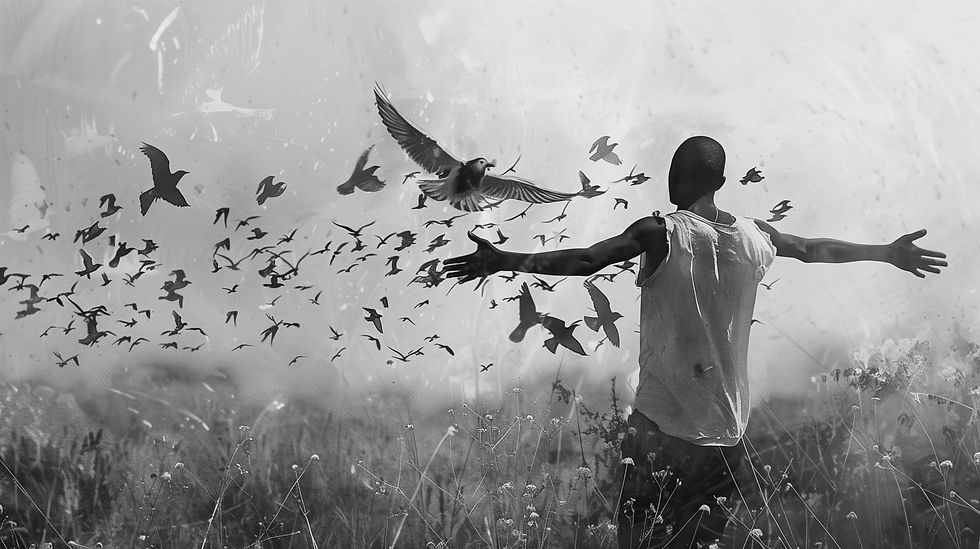
If an idea, emotion, or habit dominates our life to the point of making us act against our own interests, we can interpret it either as an astral parasite or as an unconscious part of our psychic shadow. There are two ways of reading the same phenomenon. From a Jungian perspective, astral parasites would be unintegrated aspects of our psyche: rejected, denied, or wounded fragments that, by not being acknowledged, gain a life of their own and sabotage us from within.
As long as these energies remain in the shadow, they function as inner demons, draining our vital force and limiting our growth. Depth psychology holds that only by making the unconscious conscious can we be free. To recognize, integrate, and transform those hidden parts is, ultimately, the true exorcism. Jung’s famous quote takes on special significance here:
"Until you make the unconscious conscious, it will direct your life, and you will call it fate."
Perhaps the deeper mystery is not whether astral parasites exist, but why they cling to us so fiercely. Perhaps, deep down, they are not foreign to us at all, but mirrors of our unhealed wounds. Understanding them is not only a matter of spiritual defense, but of radical self-knowledge. Because where they drain us the most may be precisely where we most need to heal.


Comments